Cheers for Beer! Collecting Beer Bottles

In this blog we return to Ronnie’s Collection Notebook, home to her wonderfully odd assortment of treasures. Between the spoons, rocks, marbles and Cornish keepsakes lurked a rather unexpected fascination...bottles. Ronnie loved a tipple, naturally, but she also loved digging up old bottles from marshland and fishing them out of tips and skips.
Collecting beer bottles can lead you on an exciting chase or, if you’re not careful, a full blown pub crawl disguised as “research.”
Beer, like mead and cider, has been brewed in this country for centuries. For a long time it was mostly made at home, but once taverns and inns became necessary, beer began to be brewed in large quantities. You could even buy it and take it away in a can , a practice that has made a triumphant return in recent years. But the introduction of the beer bottle was a real innovation, one that changed the look of the country and the habits of its drinkers.
Beer brewing soon became big business, and public houses started buying their beer from breweries. Before that, landlords (or more often their wives) brewed beer in the back yard, the kitchen, the cellar, or in some cases the bar itself. Many pubs had a set “brew day” each week. With so many small country pubs producing their own beer, an astonishing variety of beer bottles appeared. Some were plain, but others proudly carried the name of the pub a sort of early branding exercise, long before marketing departments existed.
Large breweries began to dominate towards the end of the eighteenth century and into the nineteenth, helped along by the Beer Act of 1830. The Act aimed to reduce gin drinking by making beer cheaper and more widely available and if it also kept farmers happy by increasing demand for hops and barley, well, all the better. The introduction of the internal screw stopper by Henry Barrett in 1872 was another leap forward, saving many a drinker from the heartbreak of a flat pint.
The Bass Red Triangle became the first ever registered trademark, and it’s still in use today. Small local breweries were gradually absorbed into larger ones such as Charrington, Bass, and Whitbread.
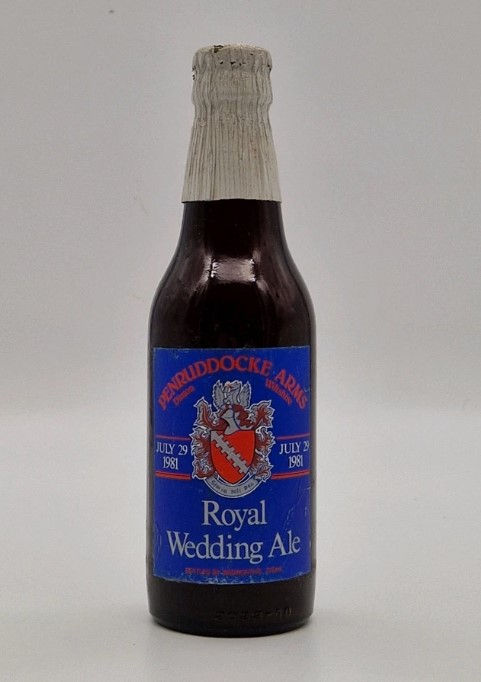
And as if individual pub bottles, local brewery bottles, and the big brewery bottles weren’t enough, commemorative bottles have appeared from time to time, usually for Royal occasions. Many of us remember the special brew produced for the wedding of Prince Charles and Lady Diana. A bottle like that is the sort of thing you buy with great excitement, put on a shelf for “safekeeping,” and then rediscover twenty years later wondering whether it’s now a collector’s item or a health hazard!
A rubbing from a commemorative bottle made to commemorate the visit of George V and Queen Mary to the Ryland works at Barnsley. The bottle is aqua with single marble lugs. It is believed that every employee at Rylands was presented with a bottle.
It’s been a little while since we dipped back into Ronnie’s Collections Book, so here’s a gem that deserves a moment in the spotlight - beer bottles! History, hops, and a hint of humour… Ronnie would absolutely approve of us sharing this piece. From backyard brews to the famous Bass Red Triangle, every bottle has a story to tell. More treasures coming soon!


Comments