A Philatelic Tour of Wales - South Wales
The main industries are coal mining and heavy industry such as steel making; Cardiff and Swansea are the two main industrial areas with coal having been mined throughout the area.

Cardiff was a small market town situated at the mouth of the River Taff and was if little importance until the Industrial Revolution and the construction of Glamorganshire Canal, the digging of the first dock and the arrival of the railways. It became the foremost seaport handling iron and coal. Cardiff was not declared a city until 1905 and was the only officially declared capital city of Wales by Elizabeth II in 1955.
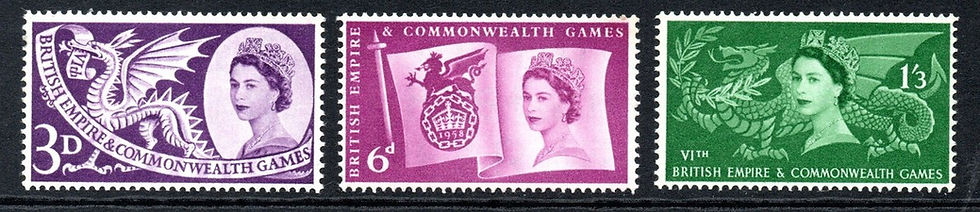
The 6th Commonwealth Games of 1958 were held at Cardiff when the Queen made a recorded message replayed at the closing ceremony declaring Prince Charles, Prince of Wales. Cardiff is also famous as the home of Welsh Rugby at Cardiff Arms Park, which is named after a former public house. Captain Scott, who had a home on the Gower Peninsula at Rhossili, departed from Cardiff in the Terra Nova in 1910 on his successful but ill-fated Antarctica Expedition. Cardiff is also home of the National Welsh Opera.
The Welsh Folk Museum is situated at St. Fagans and has a section dealing with Eisteddfodau. Eisteddfodau were well established by the middle of the nineteenth century and were a means of safeguarding the Welsh language and of promoting Welsh culture. Music, poetry, singing and drama are an important part of the Welsh culture and local Eisteddfodau are held all over Wales, even in small villages. The most famous are, perhaps, the International Eisteddfod held every year at Llangollen and the National Eisteddfod of Wales held during the first week of August and alternating between South and North Wales. Each and every one of these Eisteddfodau are governed by their own Gorsedd, composed of Archdruids and Bards.

The Welsh Harp is unique, no where else has retained this triple stringed instrument. It consists of three close set rows of strings, with a diatonic scale for each hand, with a row of accidentals in the middle. It is a very demanding instrument to play and is only suitable for solos and as an accompaniment for singing, it is not suitable for the orchestra.
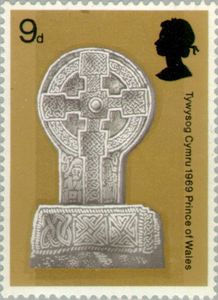
The Romans settled in South Wales around the River Taff between 60-90AD and a Roman Milestone can be seen at the Margam Museum, along with other important inscribed and sculptured stones, including Ogham writing and the Wheel Cross of Cynfelyn. Margam Abbey was a Cistercian monastery founded by the Earl of Gloucester in 1147 on the site of a previous Celtic monastery.
Part of the culture of Wales are the many tales told of King Arthur whose headquarters were at Caerleon. He almost certainly existed but not quite in the knightly fashion that we know. He is said to have been a military leader of the Britons after the collapse of the Roman Empire. But most of us prefer the legends of the Mabinogion and Sir Thomas Malory’s Mort d’Arthur, printed by Caxton in 1485. There are many tales surrounding the death of Arthur but they all end with his being carried off to the Isle of the Blest, Avalo, there to lie until Britain needs him.

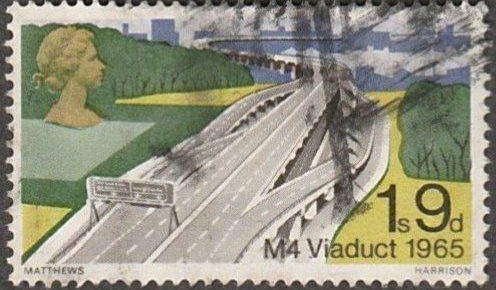
In 1922 the Government Railway Grouping Scheme came into effect when the Great Western Railway amalgamated with seven small Welsh railways, thereby covering all of Wales. At the time Caerphilly Castle was the most powerful locomotive in Britain and was built and owned by the Great Western railway, she was exhibited at the British Empire Exhibition during 1924. Caerphilly itself was a Great Western Railway repair shop. Today’s modern road transport comes from London on the M4, which is at present the only major motorway in Wales, and crosses the River Severn via the Severn Bridge.


Comments